Concrete Steps & Stairs
Create safe, durable steps that connect different levels of your property and provide reliable access for years to come.
Why Concrete Steps Matter
Steps and stairs are critical safety features on any property. They need to be solid, level, and properly constructed to prevent accidents and provide reliable access. Poorly built steps can settle, crack, or become uneven, creating trip hazards that put people at risk.
Concrete is the ideal material for exterior steps because it handles weather, heavy use, and time without deteriorating. Unlike wood steps that rot or metal steps that rust, concrete steps stay strong and stable year after year. They also require minimal maintenance, which saves you time and money over the life of the installation.
Beyond safety and durability, well-designed steps enhance your property's appearance. They guide visitors naturally from one level to another and can incorporate design elements that complement your home's style. Whether you need simple front porch steps or an elaborate staircase connecting terraced levels, concrete delivers both function and visual appeal.
- Safety first: Properly constructed steps with correct dimensions prevent accidents and injuries.
- Weather resistant: Concrete stands up to rain, heat, and temperature changes without breaking down.
- Low maintenance: No painting, staining, or replacing boards every few years.
- Customizable design: Choose from various finishes, colors, and styles to match your property.
Types of Concrete Steps We Build
Different situations call for different types of steps. We design and build concrete stairs that fit your property's specific needs, from simple utility steps to grand entrance staircases.
Front Entry Steps
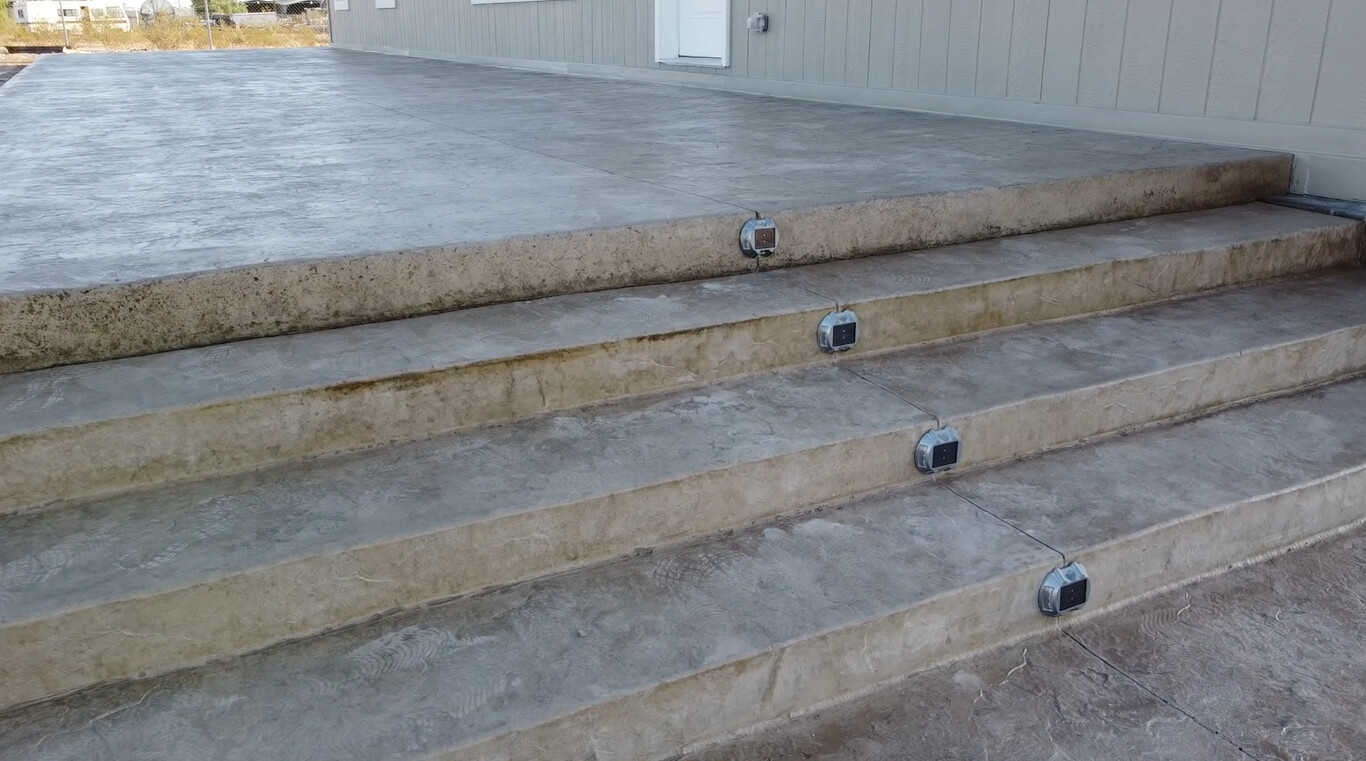
Entry steps leading to your front door create the first impression of your home. We build these steps with proper proportions for comfortable use and design elements that enhance curb appeal. You can choose from plain concrete, broom finish, or decorative options like stamping and coloring to create the look you want.
Porch and Deck Stairs
Connecting your porch or deck to ground level requires sturdy stairs that handle frequent use. We build these stairs with the right rise and run measurements for safe, comfortable climbing. Proper footings and reinforcement ensure the stairs stay level and do not settle over time.
Basement and Walkout Stairs
Exterior basement stairs provide access to lower levels and must be built to handle water drainage and weather exposure. We design these stairs with proper slope and drainage so water does not pool on the steps or flow into the basement. Walls on either side prevent soil erosion and create a safe passage.
Landscape and Terrace Stairs
For properties with multiple levels, landscape stairs connect terraces and create paths through sloped yards. These stairs can be simple and functional or incorporate design elements like wide treads, integrated planters, or decorative finishes. We work with your existing landscape to create stairs that feel like a natural part of the setting.
Designing Safe and Comfortable Steps
Building code specifies certain requirements for steps, but good design goes beyond just meeting minimums. The best steps have comfortable proportions that feel natural to use, proper traction to prevent slips, and visual cues that make them easy to navigate.
Step dimensions matter significantly for safety and comfort. The rise (vertical height of each step) and run (horizontal depth) need to work together. Steps that are too steep feel unsafe, while steps that are too shallow can trip people. We design stairs with proven proportions that most people find comfortable to climb.
Handrails become necessary when you have more than a few steps. We can install handrails as part of the project or prepare the steps for handrails to be added later. Proper handrail placement makes stairs accessible for people with mobility challenges and provides support for everyone during wet or icy conditions.
Surface finish affects both appearance and safety. A broom finish provides excellent traction but has a simple look. Stamped or textured finishes add visual interest while still providing grip. We help you choose a finish that balances aesthetics with practical performance.
How We Build Concrete Steps
Building concrete steps requires precision and attention to detail. Each step must be exactly the right height and depth, and the entire structure needs to be properly supported so it does not settle or shift over time.
We start by preparing the foundation. This typically means excavating to undisturbed soil and pouring a concrete footing that extends below the frost line. The footing prevents settling and provides a solid base for the steps. For steps attached to buildings, we tie into the existing foundation to ensure everything moves together.
Next comes building the forms. Forms hold the concrete in the right shape while it cures. For steps, this means creating each tread (the part you step on) and riser (the vertical part) with exact measurements. We double-check dimensions before pouring because corrections after the concrete hardens are difficult and expensive.
We reinforce the steps with steel rebar or wire mesh to prevent cracking. The reinforcement is placed strategically to handle the stress points where weight and movement create the most force. After pouring the concrete, we finish each tread to the specified texture and cure the concrete properly to achieve full strength.
Concrete Steps and Stairs in Hutto
We have built concrete steps throughout Hutto for homes and businesses. Each project reinforces our understanding of local soil conditions and building requirements. Central Texas clay soil requires proper foundation work to prevent settling, and we use techniques proven to work in these conditions.
Many Hutto properties have elevation changes that make steps necessary for safe access. Whether you need steps leading to your front door, connecting patio levels, or providing walkway access, we design stairs that fit your property and use patterns. Our goal is to create steps that feel natural to use and enhance your outdoor space.
We also understand the importance of timely completion. You need access to your home or building, and we work efficiently to minimize any disruption. Most step projects complete within a few days, including curing time. We keep the work area safe and tidy throughout the process.
Whether you are building new steps or replacing old ones, we bring the experience and attention to detail that quality stairway construction requires. Your property deserves steps that are safe, functional, and built to last. Explore our concrete services in Hutto and see how well-built steps can improve safety and access on your property.
Frequently Asked Questions
What are the standard dimensions for concrete steps?▼
Building codes typically require a maximum rise (step height) of 7 to 8 inches and a minimum run (step depth) of 10 to 11 inches. However, the most comfortable steps often have a 6 to 7 inch rise and an 11 to 12 inch run. We design steps based on these comfortable proportions while ensuring code compliance. All steps in a single flight should have uniform dimensions so your foot knows what to expect with each step. Variations in step height are a common cause of trips and falls, which is why consistency matters so much.
Can you replace just part of existing concrete steps?▼
In some cases, we can repair damaged sections of concrete steps without replacing the entire structure. Surface damage, small cracks, and corner breaks can often be repaired or resurfaced. However, if the steps have settled, the foundation has failed, or there is extensive cracking, replacement is usually the better option. Partial repairs work best when the underlying structure is sound and only cosmetic or minor damage exists. We evaluate your steps and recommend the most cost-effective solution based on their condition.
How long do concrete steps last?▼
Properly built concrete steps can last 25 to 50 years or more with minimal maintenance. The key factors affecting longevity include the quality of the foundation, proper reinforcement, adequate drainage, and the concrete mix used. Steps built on stable footings and protected from water infiltration will outlast steps built directly on soil or without proper drainage. Regular cleaning and occasional resealing help maintain appearance and protect the surface. If you notice settling or significant cracking, addressing these issues early prevents them from becoming bigger problems that shorten the steps' lifespan.